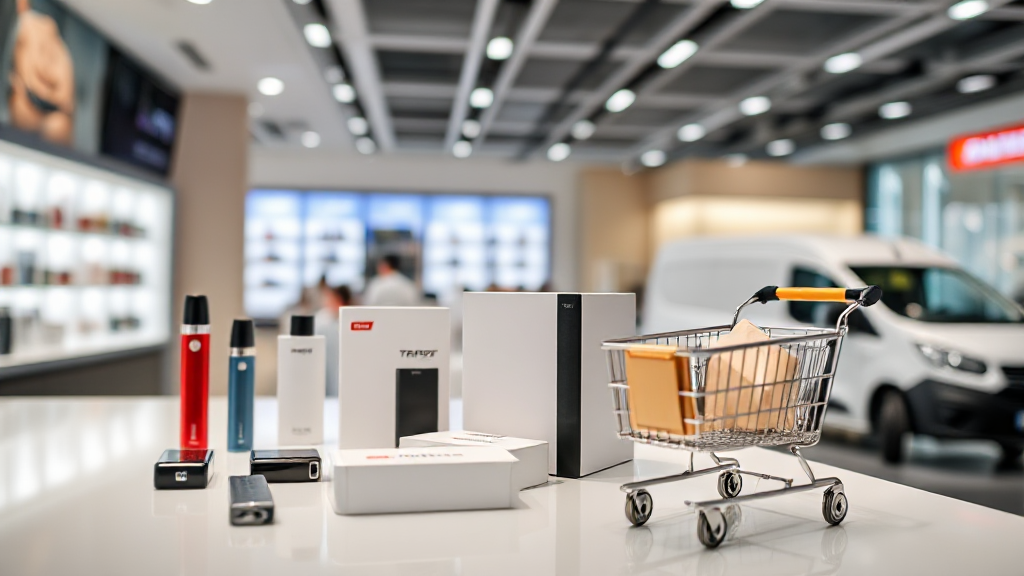
Why Most Terea Singapore Buyers Get It Wrong Before They Even Order
The most common mistake people make with terea singapore is treating it like a routine online purchase where the only thing that matters is the lowest price. That single assumption is what leads to counterfeit sticks, stalled deliveries, unclear return policies and a frustrating week of chasing a seller who has already gone quiet. As someone who has compared the alternatives side by side, I can tell you the difference between a good outcome and a bad one almost never comes down to price. It comes down to what you verify before you pay.
This is not a scare piece. Most sellers in the Singapore market are legitimate, and most orders arrive without incident. But the market has enough grey-area operators that a few minutes of checking separates a smooth purchase from a costly mistake. Below is what actually matters, in the order I would check it.
What the Terea Singapore Market Actually Looks Like Right Now
Terea is a heated tobacco product designed for use with a compatible holder, and in Singapore it sits in a strange position. Demand is steady and well documented, but the supply chain is fragmented. You will find listings across social media, messaging apps, small standalone websites and larger e-commerce operations, and the quality of each varies enormously.
The fragmentation is the root of the problem. When a product is sold through dozens of unconnected channels, there is no single standard for storage, authenticity or customer service. A pack that sat in a hot warehouse for three months is technically the same product as one stored properly, but it does not perform the same way. A seller who sources through a verified distributor is selling the same item as one who sources through a reseller of a reseller, but only one of them can tell you where it came from.
What has changed in the last couple of years is that the better retailers have started behaving like real businesses. They publish delivery terms, they offer cash on delivery, they use discreet packaging, and they respond to messages within a reasonable window. That professionalisation is the single best signal you have. If a seller looks like a real retail operation rather than a person with a phone, you are already in a better position.
The Verification Checklist I Actually Use Before Paying
This is the part most buyers skip, and it is the part that matters. I run through five checks, and any seller who fails two or more of them gets dropped regardless of price.
First, does the seller have a stable web presence? A dedicated store with consistent product listings, a working contact method and terms of service is a very different thing from a listing that appears and disappears. Stability suggests the operator intends to be around next month, which matters enormously if something goes wrong with your order.
Second, is payment structured to protect you? Cash on delivery is the strongest consumer protection available in this market, because you are not sending money into the void before you have anything in hand. A seller who offers COD is signalling confidence in their own fulfilment. A seller who insists on full upfront transfer to a personal account is signalling the opposite.
Third, is the product described specifically? Vague listings are a warning sign. A serious retailer tells you the brand, the model, the puff count where relevant and the packaging format. If a listing says only “Terea, good price, PM me,” you have no idea what you are buying.
Fourth, what does the delivery promise actually say? “Fast delivery” is meaningless on its own. A real commitment gives you a window, a coverage area and a process for what happens if the delivery fails. In a dense city like Singapore, same-day or next-day delivery is achievable, and sellers who can genuinely do it will say so plainly.
Fifth, how does the seller handle problems? This is the hardest thing to assess before you buy, so I look for indirect evidence. Do they publish a return or replacement policy? Do they have reviews that mention resolution rather than just speed? A seller who has clearly thought about failure is usually a seller who has dealt with it before.
Why Counterfeits and Poor Storage Are the Real Risks
Let me be direct about the two failure modes that actually cause harm, because the online conversation around this topic tends to be vague.
The first is counterfeit product. Heated tobacco sticks are a high-volume, low-margin category, which makes them attractive to counterfeiters. A fake stick may look close to identical in a photograph and behave completely differently in use, and there is no reliable way to tell from a listing image alone. The defence is not cleverness on your part; it is buying from a retailer whose sourcing you have reason to trust.
The second is storage and age. Heated tobacco products degrade. Heat, humidity and time all affect how they perform, and Singapore’s climate is unforgiving on all three counts. A seller moving high volume turns stock quickly and stores it properly. A seller sitting on old inventory, or storing it in a hot back room, is selling you a degraded product at a normal price. You cannot detect this before purchase, which is exactly why the seller’s turnover and professionalism matter so much.
Neither risk is exotic. Both are common enough that a verification habit pays for itself quickly. And both are almost entirely mitigated by buying from an established operation rather than the cheapest anonymous listing you can find.
How the Wider Disposable Market Informs Better Buying Decisions
One of the more useful things I did while comparing options was look at how the broader vape retail market operates, because the same sellers often run both categories and the standards carry across. A retailer that handles a high-volume disposable range competently tends to handle everything else competently too.
Take puff-count products as an example. A serious retailer lists them with real specificity, which tells you they know their inventory rather than drop-shipping blind. You will see listings for the marbo vape 25k described with its actual capacity and format, and the same discipline shows up in how they describe a lana pen plus 9k or a lana pix 20k. That level of detail is not marketing flourish. It is evidence that someone is actually managing stock.
The pattern repeats across the category. A marbo 25k and a lana pix are different products with different specifications, and a retailer who can explain the difference is a retailer who can also tell you where their Terea stock comes from. Compare that with a seller whose entire product description is a photo and a price.
The same logic applies to newer or less common formats. When a retailer carries something like a snowwolf 16k or a lana ultra 2 alongside a broad mainstream range, it usually means they are sourcing through established channels rather than opportunistically. Breadth plus specificity is a strong combined signal.
None of this guarantees anything on its own. But it gives you a way to rank sellers before you commit, and ranking sellers is the whole game.
Delivery, Discretion and Cash on Delivery in Practice
Let us talk about the operational side, because this is where a lot of otherwise reasonable purchases fall apart.
Delivery speed in Singapore is genuinely achievable at a high standard. The country is small and densely served, so a competent retailer can offer same-day or next-day windows without exaggeration. The question to ask is not whether fast delivery is possible but whether this particular seller can deliver on the promise consistently. Reviews mentioning delivery reliability are worth more than any banner claim.
Discretion matters to a lot of buyers, and it is worth being explicit about what good practice looks like. Plain outer packaging, no product names on the label, no obvious branding on the courier bag. This is standard for professional retailers and it is a reasonable thing to expect. If a seller cannot confirm how they package, that tells you something.
Cash on delivery is the piece I would weight most heavily. It shifts the risk of a failed order away from you and onto the seller, which is precisely the incentive you want. It also filters out the operators who cannot actually fulfil, because a seller who has to hand over goods before getting paid is a seller who has to be confident in their supply. If a retailer offers COD as standard rather than as a special favour, treat that as a meaningful quality signal.
How to Compare Two Sellers Without Getting Lost in Details
When I compared alternatives, I found it easy to drown in small differences and lose sight of the decision. So I reduced it to a simple scoring approach, and it works well.
Score each seller on four things: sourcing credibility, payment protection, delivery reliability and problem resolution. Give each a simple high, medium or low. Then ignore everything else. Price differences of a few dollars disappear against the cost of a bad order, and brand claims that cannot be verified are noise.
The sellers who score well on all four tend to share a profile. They run a proper storefront, they list products with real detail, they offer cash on delivery, they package discreetly, and they have a visible process for when things go wrong. That profile is not accidental; it is what a functioning retail business looks like. Once you have identified two or three sellers in that group, the decision becomes easy and the price comparison becomes a tiebreaker rather than the main event.
The mistake I opened with, treating this as a pure price hunt, is understandable. It is also the reason so many buyers end up disappointed. Flip the order. Verify first, shortlist second, compare price last. That sequence is what separates a purchase you forget about from one you regret.
The Bottom Line on Buying Terea in Singapore
There is no secret trick to getting this right. The market is fragmented, the risks are real but manageable, and the difference between a good and bad experience comes down to diligence applied before payment rather than luck after it.
Check whether the seller is a real, stable business. Confirm that payment is structured to protect you, ideally through cash on delivery. Look for specific product descriptions rather than vague listings. Read the delivery promise closely and expect discretion as standard. And judge the seller on how they would handle a problem, not just how fast they claim to ship.
Do those things and the odds shift heavily in your favour. Skip them and you are relying on the seller’s goodwill, which is exactly the variable you cannot control. The buyers who get this right are not the ones who found the cheapest listing. They are the ones who did the boring checks first and let everything else follow from there.
