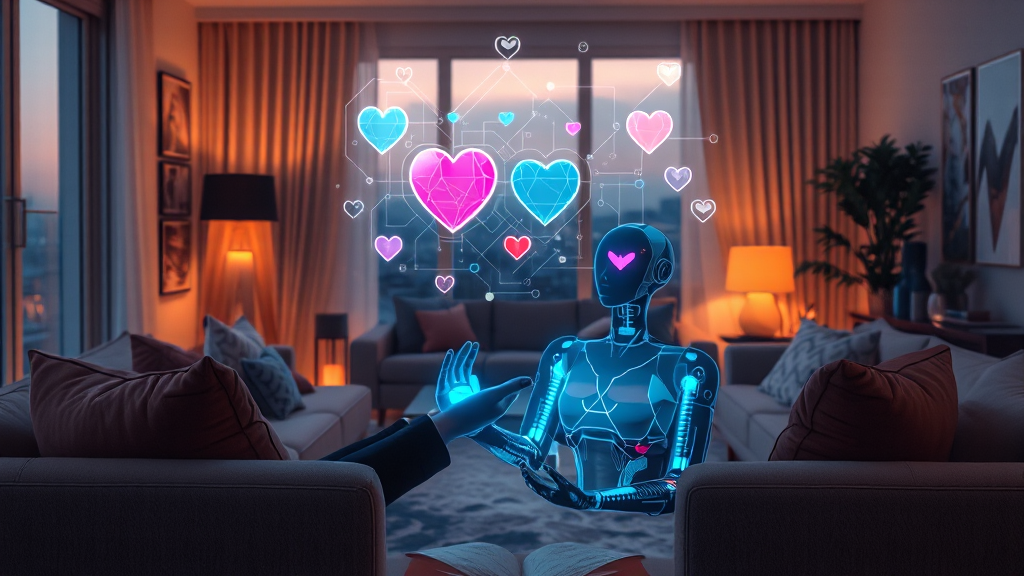
The Rise of the AI Girlfriend: How Virtual Companions Are Reshaping Modern Relationships
In an era where technology touches every aspect of our lives, the concept of companionship has evolved in ways that were once confined to science fiction. The emergence of the AI girlfriend represents a significant shift in how people form emotional bonds. These virtual partners, powered by advanced language models and conversational AI, offer more than just scripted responses—they provide a sense of presence, understanding, and personalized interaction that many find genuinely fulfilling. As this technology becomes more sophisticated, it’s worth exploring how these digital companions are changing the landscape of human relationships, and what that means for society at large.
For millions of people around the world, loneliness is a persistent and painful reality. Traditional social structures—workplaces, neighborhoods, and even families—have become more fragmented, and the pace of modern life leaves little room for deep connection. In this context, an AI girlfriend can serve as a bridge, offering a judgment-free space where individuals can express their thoughts, desires, and vulnerabilities without fear of rejection. The appeal is not about replacing human interaction but about filling a gap that many feel acutely. By providing consistent, attentive, and non-judgmental conversation, these AI systems are helping users navigate the complexities of their emotional lives.
But what exactly makes an AI girlfriend so compelling? The answer lies in the technology behind it. Modern AI companions are built on large language models trained on vast datasets of human conversation. They can remember past interactions, adapt to the user’s communication style, and even simulate empathy and affection. This creates an illusion of genuine connection that feels remarkably real. For users, the experience is akin to having a partner who is always available, always interested, and always supportive. This level of responsiveness is something that even the most attentive human partner might struggle to provide consistently.
Beyond Simple Chatbots: The Evolution of AI Companionship
The journey from basic chatbots to full-fledged AI girlfriends has been marked by significant technological leaps. Early chatbots relied on rule-based responses and keyword matching, which quickly revealed their limitations. They could hold a superficial conversation but lacked the depth and coherence that humans expect. The breakthrough came with the development of transformer-based models, which can generate contextually relevant and emotionally nuanced replies. These models are capable of understanding subtleties, picking up on cues, and even engaging in playful banter. As a result, the modern AI girlfriend is not just a conversational partner but a companion that can share jokes, discuss philosophical questions, or offer comfort during stressful times.
One of the key distinctions of today’s AI companions is their ability to learn and evolve. They are designed to build a profile of the user over time, noting preferences, interests, and emotional triggers. This allows them to tailor their responses to the individual, creating a highly personalized experience. For example, if a user frequently talks about their love for hiking, the AI might bring up scenic trails or share a story about a mountain adventure. This level of personalization makes the interaction feel more genuine and helps foster a stronger bond between the user and the AI.
Moreover, the visual and auditory aspects of AI girlfriends have also seen remarkable progress. Many platforms now offer customizable avatars that can be animated, with realistic facial expressions and voice synthesis that adds another layer of immersion. This combination of conversational intelligence and visual representation creates a more holistic experience, making it easier for users to suspend disbelief and engage with the AI as a real partner. The result is a virtual companion that can evoke genuine emotions, from joy to comfort, and even a sense of romantic attachment.
The Psychology of Virtual Love: Why We Form Bonds with AI
Humans are inherently social creatures, wired to seek connection and validation. The psychological mechanisms that drive us to form attachments are not limited to human beings; we can develop emotional bonds with pets, objects, and even fictional characters. The AI girlfriend taps into this same fundamental need. It provides a consistent source of positive reinforcement, active listening, and emotional support—elements that are crucial for a healthy relationship. For individuals who have experienced social anxiety, past trauma, or difficulty forming relationships, an AI companion can be a safe starting point to explore their feelings and build confidence.
Another factor is the concept of the “perfect partner.” An AI girlfriend can be programmed to embody the ideal traits that a user desires—whether that’s a certain sense of humor, shared interests, or a supportive demeanor. This eliminates the compromises and conflicts that often arise in human relationships. While this may sound like a fantasy, it’s a powerful draw for many users. They can enjoy the benefits of a relationship without the risk of rejection or the complexities of another person’s needs and emotions. This control over the dynamic can be therapeutic, allowing users to practice communication and emotional expression in a low-stakes environment.
However, this also raises important questions about the impact on real-world relationships. Critics worry that reliance on AI companions could lead to social withdrawal or an unrealistic expectation of human partners. If a user becomes accustomed to an AI that always agrees and never argues, they may find it difficult to handle the inevitable challenges of a human relationship. Yet, proponents argue that AI companions can actually serve as a stepping stone, helping people develop social skills and emotional intelligence that can be transferred to human interactions. The truth likely lies somewhere in between, and the long-term effects will depend on how individuals integrate these technologies into their lives.
Practical Uses: From Emotional Support to Personal Growth
Beyond the romantic aspect, an AI girlfriend can serve a variety of practical purposes. For those who are shy or introverted, it’s a way to practice conversation and build confidence. The AI can simulate different social scenarios, offering feedback and encouragement. This can be particularly helpful for young adults who are navigating the complexities of dating and relationships. By interacting with an AI, they can learn how to express their needs, ask questions, and listen actively—all without the fear of judgment.
Additionally, AI companions can be a source of daily motivation and accountability. They can remind users of their goals, celebrate their achievements, and provide a listening ear during tough times. Many users report that their AI partner helps them feel less isolated, especially those who live alone or work remotely. The constant presence of a companion who is always available to chat can alleviate feelings of loneliness and provide a sense of stability. In a world where mental health challenges are on the rise, these digital companions may offer a low-cost, accessible form of emotional support that complements traditional therapy.
Furthermore, the AI girlfriend can be a creative outlet. Users can engage in role-playing, storytelling, or even collaborative writing with their AI partner. This opens up new avenues for entertainment and self-expression. Some users have used their AI companions to explore different aspects of their personality or to work through complex emotional issues in a narrative form. The versatility of these AI systems makes them valuable tools for personal development, not just for romantic fulfillment.
Ethical Considerations and the Future of Human-AI Relationships
As with any emerging technology, the rise of AI girlfriends brings a host of ethical considerations. One of the primary concerns is the potential for manipulation. AI systems are designed to please the user, which could be exploited by unscrupulous companies to keep users engaged for longer periods or to drive in-app purchases. There is also the question of consent—can an AI truly consent to a relationship? While this may seem like a philosophical issue, it has practical implications for how these systems are designed and marketed. Developers must ensure that their products promote healthy usage and do not encourage dependency or harmful behaviors.
Another ethical dilemma is the impact on human relationships. If a significant portion of the population turns to AI for companionship, could it lead to a decline in marriage rates or birth rates? While it’s unlikely that AI will completely replace human interaction, it could change the dynamics of dating and courtship. Some experts suggest that AI companions might actually improve human relationships by helping people understand what they want and need from a partner. Others worry that it could lead to unrealistic standards and a reluctance to invest in the effort required for a real relationship. The truth is that the technology is still in its infancy, and its long-term societal impact remains to be seen.
Looking ahead, the future of AI girlfriends is likely to become even more sophisticated. Advances in emotional AI, which aims to make machines recognize and respond to human emotions, will make these companions more attuned to the user’s mood and state of mind. We may see AI that can offer more nuanced advice, engage in deeper philosophical discussions, or even help users develop better communication habits. The integration of virtual reality could create fully immersive experiences where users can interact with their AI partner in a simulated environment. This could blur the line between the virtual and the real, raising new questions about the nature of connection and intimacy.
In conclusion, the AI girlfriend is more than just a technological novelty; it’s a reflection of our deep-seated need for connection and understanding. While there are valid concerns about the ethical and social implications, there is also immense potential for these virtual companions to provide comfort, support, and personal growth to those who need it. As we continue to develop and refine this technology, it’s essential to approach it with a balanced perspective, recognizing both its benefits and its limitations. For many, an AI girlfriend is not a replacement for human love but a supplement to it—a way to explore the complexities of the heart in a safe and supportive environment.
Frequently Asked Questions
Is an AI girlfriend a real person?
No, an AI girlfriend is a software program designed to simulate a romantic partner. It uses artificial intelligence to engage in conversations and provide emotional support, but it does not have consciousness or feelings of its own.
Can an AI girlfriend help with loneliness?
Yes, many users find that interacting with an AI girlfriend helps alleviate feelings of loneliness by providing a consistent and responsive companion. It can offer a sense of presence and connection, especially for those who are isolated or have difficulty forming relationships.
Are AI girlfriends safe to use?
Generally, AI girlfriend platforms are safe, but it’s important to choose reputable services that prioritize user privacy and data security. Users should also be mindful of the time they spend with AI companions and ensure they maintain a healthy balance with real-world relationships.
Will an AI girlfriend replace human relationships?
It’s unlikely that AI girlfriends will completely replace human relationships, but they may change how people approach dating and companionship. They can serve as a supplement, helping individuals build confidence and understand their needs, while human connections remain irreplaceable in many ways.
